Overview
CloudSphere Hosting is a web hosting platform built to serve businesses, developers, and website owners who need reliable, managed hosting infrastructure. The platform offers shared hosting, VPS, and dedicated server solutions, and needed a website that matched the quality of the services it was selling.
Background
When CloudSphere came to Red Star Technologies, there was no website in place. No hosting plans were presented online. No pricing was visible to potential customers. Visitors who found the brand could not compare plans, check uptime guarantees, or purchase a package without going through a manual inquiry process.
The client needed a fully functional hosting services website, built from scratch, that could present their plans clearly and turn visitor interest into paying customers.
Initial Challenges
A detailed discovery process surfaced four core problems that shaped the build.
1. Presenting Technical Hosting Information Without Confusing Visitors
Hosting products carry a lot of technical weight. Storage allocation, bandwidth limits, server uptime percentages, SSL certificate inclusion, cPanel access, and domain management options all needed to be communicated on the website. Most visitors are not developers. A site owner looking for reliable web hosting does not want to read a specification sheet. The challenge was presenting that technical detail in a way that felt clear and easy to act on.
2. Establishing Trust for a New Hosting Brand
CloudSphere had no existing customer base, no published reviews, and no visible track record. In the hosting industry, trust is everything. Buyers need to believe that the platform they choose will keep their website online. Without credibility signals, professional design, and structured service communication, a new hosting brand loses potential customers before they even reach the pricing page.
3. Converting Visitors Into Paying Customers
A hosting website is a sales tool first. Clean design and good copy only matter if they produce sign-ups and plan purchases. The site needed strategic call-to-action placement, clear plan comparisons, and a purchase flow that removed friction at every step. Getting visitors to the site was not the problem. Getting them to commit to a plan was.
4. Building for Future Service Expansion
CloudSphere planned to add new hosting products, reseller packages, and additional service tiers after launch. A rigid website structure would make every future addition a significant rebuild. The platform needed to be built in a modular way so that adding new plans or service categories remained simple and did not require starting over each time.
Strategy Implementation
1. Structured Hosting Plan Presentation
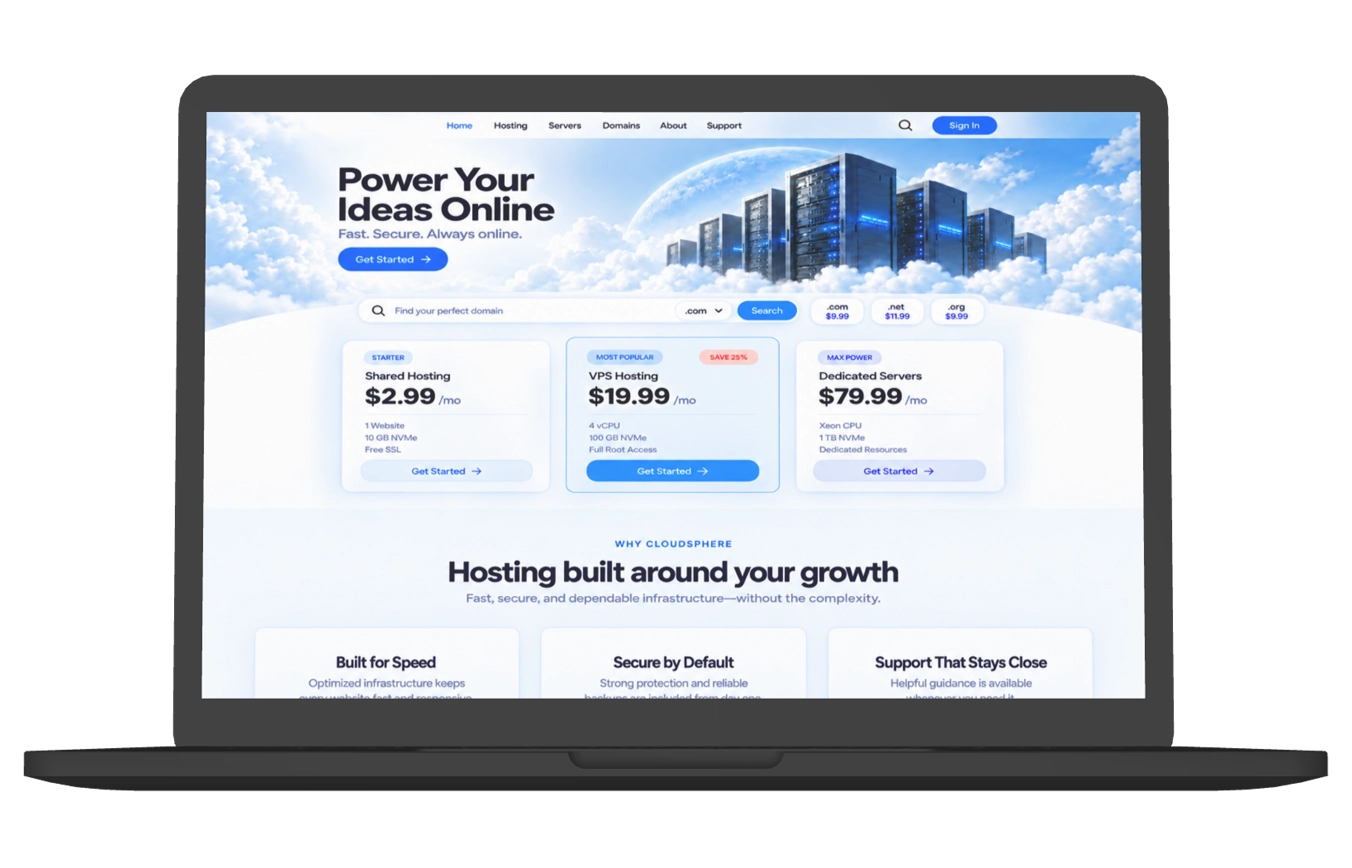
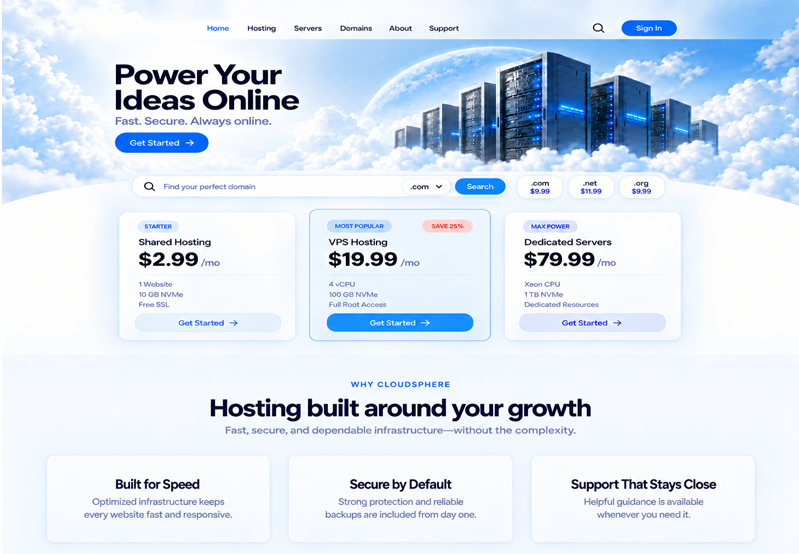
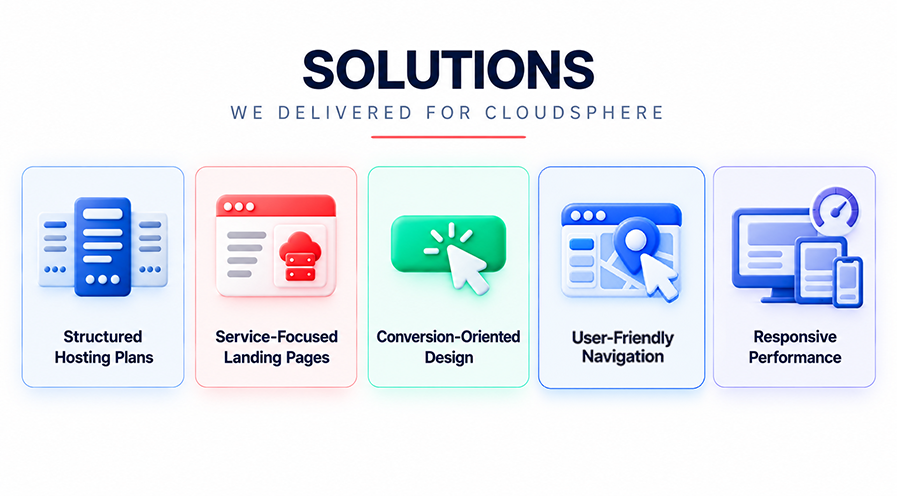
We started by mapping each hosting product to a clear pricing tier. Shared hosting, VPS, and dedicated server plans were given separate visual sections with feature breakdowns that allowed visitors to compare storage, bandwidth, uptime guarantee, and support response time side by side. Rather than grouping every specification together, we separated the most decision-relevant details so visitors could identify the right plan quickly.
Each plan was assigned a plain-language description explaining who it was best suited for. A small business owner reading the shared hosting description could see within seconds that it covered their needs. A developer evaluating a VPS plan could find the CPU and RAM details without having to dig through documentation. We also highlighted the most popular option visually, which gave undecided visitors a clear starting point and reduced decision fatigue on the pricing page.
2. Service-Focused Landing Pages
Beyond pricing, CloudSphere needed dedicated pages explaining each hosting category in detail. We built landing pages for shared hosting, VPS hosting, and dedicated server solutions. Each page explained the service in accessible terms, identified the type of customer it was designed for, and outlined the infrastructure advantages included with that plan.
These pages served more than one purpose. A visitor arriving from a search query for "managed VPS hosting" or "dedicated server for high-traffic websites" would land on a page built specifically for that need. That relevance reduced bounce rates and improved the chances of that visitor moving deeper into the site. The pages also gave the website enough structured, keyword-relevant content to compete in organic search results for hosting-related queries.
3. Conversion-Oriented Design
Conversion-oriented design guided visitors toward taking action throughout the site. Strategically placed call-to-action sections encouraged sign-ups at key moments, while clear pricing tables were designed for quick, easy comparison between plans. Every element of the messaging stayed lead-focused, gently guiding users toward purchasing hosting services rather than leaving the decision entirely up to them.
4. User-Friendly Navigation
User-friendly navigation made it simple for visitors to explore the site without friction. A straightforward navigation structure allowed users to easily browse through hosting plans, supported by well-organized content sections that clearly explained features and services. The clean overall layout further improved readability and usability across the site.
5. Responsive Design and Frontend Performance
The site was built with React.js and Next.js. Using Next.js gave us server-side rendering, which meant pages were delivered to visitors as fully constructed HTML rather than requiring the browser to build them from scratch. That approach improves initial load speed and makes the content visible to search engine crawlers more reliably. For a hosting company, a fast website is also a statement about the quality of their infrastructure. A slow website from a hosting provider undercuts the brand's entire value proposition.
Every section of the site was tested across desktop, tablet, and mobile screen sizes before launch. The responsive layout ensured that visitors on any device experienced the same clean presentation of plans and pricing without broken layouts or hidden content.
Results Achieved
1. A Complete Platform Ready to Acquire Customers From Day One
CloudSphere launched with a fully functional website capable of handling the entire purchase journey, from a visitor's first landing to account creation and plan activation. The gap between potential customers and paying customers was closed.
2. Clear Plan Communication That Reduces Drop-Off
Visitors can compare hosting plans within seconds. The structured pricing tables present the differences between shared hosting, VPS, and dedicated server options without requiring a support conversation. That clarity translates directly into fewer abandoned sessions and more direct plan purchases.
3. Automated Account Provisioning Through WHMCS
Every new customer order is processed and provisioned automatically through the WHMCS integration. The CloudSphere team does not manually set up accounts or chase renewals. Billing, service delivery, and domain management all run through one connected system.
4. Service Pages That Support Organic Search Visibility
Each hosting category page was built with structured content targeting the search queries that potential customers actually use. CloudSphere now has pages that can rank for relevant hosting terms, which gives the platform a long-term acquisition channel beyond paid traffic.
5. A Modular Build That Supports Future Growth
New hosting plans, reseller packages, and service categories can be added to the platform without rebuilding the site. The structure we built accommodates growth, which means CloudSphere's development costs for future additions remain low.
Testimonial
"Red Star Technologies built exactly what we needed. The website communicates our plans clearly, the WHMCS integration worked from day one, and we have not had to process a single account manually since launch. The platform looks professional, loads fast, and gives us a real foundation to grow from."
— Client, CloudSphere Hosting
Tech Stack Summary
|
Component |
Tool / Framework |
|
Frontend |
React.js / Next.js |
|
Backend |
Node.js with Express.js |
|
Database |
MySQL / PostgreSQL |
|
Hosting Integration |
WHMCS API |
|
Authentication |
JWT / Secure Session Management |
|
Deployment |
AWS / Cloud Infrastructure |
Conclusion
CloudSphere Hosting came to Red Star Technologies without a website, without a purchase flow, and without a way to present their services to potential customers. We addressed four specific problems: making technical hosting information accessible to non-technical visitors, building credibility for a new brand, designing a site that converts traffic into customers, and creating a modular structure that supports future service expansion. The result is a professional web hosting platform with automated service delivery, structured plan comparisons, and SEO-friendly service pages that work for CloudSphere long after launch day.


 September 14, 2026